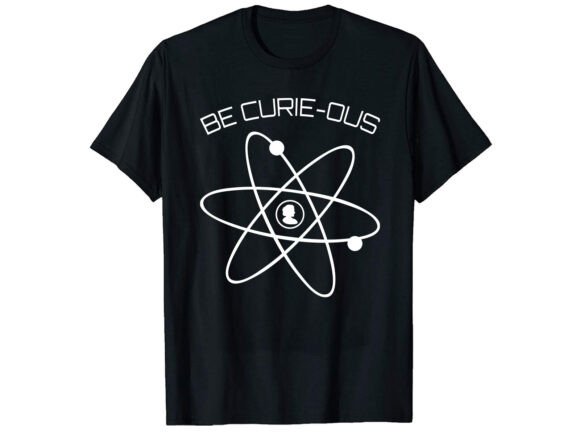
Be Curie-Ous Marie Career T-shirt: A Practical Guide to Using This Design
Choosing the right graphic for a professional or humorous apparel line often feels like navigating a maze of low-quality vectors and overused slogans. The Be Curie-Ous Marie Career T-shirt design stands out by blending scientific wit with professional pride, offering a clever play on words that resonates with educators, healthcare workers, and office managers alike. However, owning a design file is only the first step; understanding how to utilize it correctly determines whether your final product looks polished or amateurish. Many creators rush into printing without verifying file specifications, leading to blurry prints, color mismatches, and wasted inventory.
Understanding the Versatility of the Be Curie-Ous Marie Design
The core appeal of this specific design lies in its adaptability. Unlike static images that are locked to one medium, the Be Curie-Ous Marie Career T-shirt package provides a comprehensive suite of assets. You receive editable files in EPS and SVG formats, high-resolution JPGs, and PNGs at 4500×5400 pixels with 300 dpi resolution. This technical depth means the artwork isn't just for shirts. It can be scaled down for stickers, expanded for banners, or applied to mugs, bags, and gift cards without losing definition.
For professionals in nursing, accounting, or education, this design serves as a conversation starter. It transforms a standard uniform into a statement piece that celebrates the intellect and dedication of the wearer. Whether you are a small business owner looking to create custom merchandise for a retirement party or a blogger selling niche products, the ability to change colors instantly allows you to match team uniforms or brand palettes perfectly.
Common Pitfalls When Downloading and Using Vector Files
Even with a high-quality package, mistakes happen during the application phase. One of the most frequent errors involves ignoring the difference between raster and vector formats. Beginners often grab the JPG or PNG file immediately because it opens easily in basic photo editors. While these files are excellent for web previews or social media posts, they are not ideal for large-format printing or intricate cutting machines.
If you attempt to print a 300 dpi PNG onto a large banner, the image may appear pixelated or jagged at the edges. Similarly, using a raster file for vinyl cutting can result in rough edges that peel off quickly. The Be Curie-Ous Marie Career T-shirt design includes EPS and SVG files specifically to prevent this. These vector formats allow you to scale the design infinitely without quality loss. Ignoring these files limits the potential of the design and compromises the professional look of your final product.
Color Management and Editing Errors
Another overlooked detail is color management. The package offers a 100% editable color-changeable file, which is a significant advantage. However, simply clicking "auto-color" in a design program rarely yields the best results. A common mistake is selecting RGB colors for screen display when preparing a file for CMYK printing. This discrepancy often causes vibrant digital colors to appear dull or muddy once printed on fabric.
To avoid this, always check your color mode before finalizing the design. If you are sending the file to a print-on-demand service, ensure you are working within their specified color profiles. For example, a bright neon green that looks electric on your monitor might turn olive drab on a cotton t-shirt if not converted correctly. Taking the time to adjust hues manually ensures that the final product matches your vision and maintains the intended impact of the "Curie-Ous" pun.
Evaluating File Quality Before Purchase or Use
Before committing to a design project, it is crucial to verify the specifications of the files provided. Many marketplaces sell "high-quality" designs that are actually low-resolution scans. The Be Curie-Ous Marie Career T-shirt design explicitly states a resolution of 300 dpi and dimensions of 4500×5400 pixels. This is the industry standard for professional printing. Anything less will struggle to meet the requirements of modern direct-to-garment (DTG) printers or heat press applications.
Additionally, check for transparent backgrounds. Designs with white boxes around them require extra editing work to remove the background cleanly, which can introduce artifacts or halos. This specific package includes PNG files with transparent backgrounds, saving you hours of manual labor. If a design lacks this feature, you risk a cluttered look where the subject blends awkwardly with the shirt color or other elements.
Matching the Design to Your Audience
While the design is versatile, context matters. A funny medical shirt works well for a nurse's graduation or a hospital fundraiser, but it might not fit a formal corporate retreat. Understanding your audience helps you decide how to apply the graphics. For instance, using the design on a mug for a teacher appreciation event creates a personal touch, whereas placing it on a large banner for a conference requires a different approach to scaling and contrast.
Consider the demographics of your target group. Adults aged 20–50 appreciate humor that is intelligent rather than slapstick. The reference to Marie Curie appeals to those who value science, history, and education. By aligning the design with the values of your audience—whether they are firefighters, accountants, or school counselors—you increase the likelihood of the product being well-received and worn proudly.
Best Practices for Application and Production
To get the most out of this design package, follow a structured workflow. Start by opening the SVG or EPS file in professional software like Adobe Illustrator or Inkscape. Adjust the colors to match your specific needs, ensuring you are in the correct color mode for your output method. Export a high-resolution preview to visualize the final look before committing to production.
When applying the design to physical items, test a small batch first. Print a sample on the exact material you plan to use for the full run. This step reveals any issues with ink absorption, heat transfer, or color vibrancy that you might miss on a screen. For example, dark t-shirts often require a white underbase for light-colored graphics to pop, while light shirts do not. Testing ensures that the Be Curie-Ous Marie Career T-shirt design translates accurately from digital file to wearable art.
Finally, keep your files organized. Save copies of the original vector files separately from your edited versions. This practice protects your investment and allows you to reuse the design for future projects, such as holiday promotions or new product lines. By treating the design files with care and attention to detail, you ensure that every item produced reflects the high standards expected by professionals and enthusiasts alike.